About 15 years ago, I was on a business trip to Bryan, Texas, a small town near College Park, Texas, the home of Texas A&M. Our host took us to a tiny barbeque restaurant that was like what you might see in a movie. I don't remember the name of the place. There were chairs on a small front porch, and a wooden screen door that banged when opened then closed. The only seats in the restaurant were at old wooden picnic tables, that had many years of customers' initials carved in the wooden tops.
The menu was very limited. Mostly people went there for the beef brisket. I ordered brisket.
Your meal comes out laid on a piece of waxed paper: several slices of beef, a big slice of raw sweet onion, and a Bowie knife to eat it with. No fork. I had eaten brisket cooked by my father as well as brisket at Corky's Restaurant in Memphis. I had always found it to be very dry and bland. Until I tried brisket in Texas. People in North Carolina and Memphis make fun of people that cook brisket for barbeque instead of pork, and usually the ridicule is justified. However, this brisket was moist and tender, with a beautiful red smoke ring, and a great smoky flavor. I have been in search of this perfection ever since, with little luck.
About a month ago, I bought what I believe to be the best book on barbeque I have ever seen, Serious Barbecue, by Adam Perry Lang. Included in the book was a recipe for brisket that was coated in spices then slow smoked for about 14 hours. I wanted to do this-- sleep was optional.
I got a beautiful brisket from my local meat provider, Underwood Farms, which sells never-frozen grass fed beef at the Charlotte Farmer's Market on Saturdays.
I woke up at 5 a.m., pulled the brisket out of the fridge, lit the fire, spread the spices on the brisket, and put the meat on the fire. For 14 hours.
I'll cut to the chase. It wasn't good. It was dry, stringy and strangely dense. I have not idea what went wrong, but I will try again. Some day. We ate on it that night, then I threw the rest away.
Thursday, October 1, 2009


Wednesday, September 30, 2009
Coffee (The Beans)
When you are picky about the coffee that you drink (and if you are perfectly fine to have no coffee over coffee that tastes bad) you quickly learn that the quality and type of coffee beans you use are key. I have never been able to drink coffee that comes from a can that is pre-ground. I have learned that coffee starts to become stale with seconds of its grinding, and I am very sensitive to that. So I have always sought out whole beans and ground them myself. I'm not going to talk about grinders in this post; that is for another day.
Grocery stores now like to carry large selections of whole coffee beans, most of while sells very slowly. Coffee beans used in drip makers need to be used within 2 weeks of roasting before they become stale and the oils start to become rancid.
With this background starts my journey. For a while I got coffee beans at Starbucks, but the quality and age of the beans was too inconsistent, other than their Black Apron high end line, which is delivered to most of their stores around the first of the month in limited quantities and is excellent, and is unbelievable expensive at about $25 a pound.
For a long time, my mother-in-law sent us freshly roasted coffee from a Costco located in Brentwood, Tennessee, where green coffee beans are roasted daily, and often the coffee you buy is in a warm bag. That worked very well. Until we decided to go espresso.
Espresso coffee is not from a dark roasted coffee--its usually from a medium roast. A dark roast tastes burned after it runs through the heat and pressure of an espresso machine. Also, expresso roast coffee has a much narrower window of freshness because the concentration of the flavors of the coffee will bring out the flaws.
Good espresso cannot be bought at grocery stores. Julia's Coffee, a coffee shop with fair competent baristas, will sell you some of their coffee out of their stock if you ask nice. Dilworth Coffee, a local roaster with franchised stores, has very inconsistent quality and packages coffee poorly. You want to buy your coffee in sealed packages that have a little breathing valve on it so that gases can escape the coffee but oxygen cannot get in. You never want to buy coffee from an open bin. Also never buy coffee that is already flavored--the flavoring for these coffees is mixed with egg white and sprayed on the coffee beans. Yech. Use a syrup.
Currently I am splitting my orders between a very competent roaster from Raleigh, Counter Culture Coffee, and Intelligentsia Coffee in Chicago, which is reputed to have the best espresso blend you can buy, Black Cat.
Grocery stores now like to carry large selections of whole coffee beans, most of while sells very slowly. Coffee beans used in drip makers need to be used within 2 weeks of roasting before they become stale and the oils start to become rancid.
With this background starts my journey. For a while I got coffee beans at Starbucks, but the quality and age of the beans was too inconsistent, other than their Black Apron high end line, which is delivered to most of their stores around the first of the month in limited quantities and is excellent, and is unbelievable expensive at about $25 a pound.
For a long time, my mother-in-law sent us freshly roasted coffee from a Costco located in Brentwood, Tennessee, where green coffee beans are roasted daily, and often the coffee you buy is in a warm bag. That worked very well. Until we decided to go espresso.
Espresso coffee is not from a dark roasted coffee--its usually from a medium roast. A dark roast tastes burned after it runs through the heat and pressure of an espresso machine. Also, expresso roast coffee has a much narrower window of freshness because the concentration of the flavors of the coffee will bring out the flaws.
Good espresso cannot be bought at grocery stores. Julia's Coffee, a coffee shop with fair competent baristas, will sell you some of their coffee out of their stock if you ask nice. Dilworth Coffee, a local roaster with franchised stores, has very inconsistent quality and packages coffee poorly. You want to buy your coffee in sealed packages that have a little breathing valve on it so that gases can escape the coffee but oxygen cannot get in. You never want to buy coffee from an open bin. Also never buy coffee that is already flavored--the flavoring for these coffees is mixed with egg white and sprayed on the coffee beans. Yech. Use a syrup.
Currently I am splitting my orders between a very competent roaster from Raleigh, Counter Culture Coffee, and Intelligentsia Coffee in Chicago, which is reputed to have the best espresso blend you can buy, Black Cat.
Wednesday, September 16, 2009
Dining in Vegas (Part III-Dos Caminos & Zine)
Lunch is a great time in Vegas to try out the "lighter" restaurants. On consecutive days we tried two different restaurants that are night and day from each other in execution and quality: Dos Caminos and Zine Noodle Bar. To be fair, these were restaurants were not chosen by a scientific, studied method of choosing just the right restaurant after hours of research and reading reviews. Instead, the decision to eat at these places was made when the front desk gave us a couple of $30 coupons for each restaurant. So we spun the wheel of fate.
Zine's website proclaims that it has Vegas's "most authentic Asian noodle dishes." I love good Asian noodles, either Chinese sesame noodles or a Vietnamese rice noodle soup or Japanese ramen (the real stuff, not what you get in a package for 25 cents). However, looking over the four page, mixed culture menu left me confused as to what they may do well and what I should order.
I love good Chinese dim sum type appetizers, and we ordered some potstickers. As I also have mentioned before, I love Vietnamese egg rolls, and we also got an order of that. Both were ok, workman like examples. Moderately enjoyable. The eggrolls did not have the fresh herbs that traditionally accompany them.
The entrees were terrible. As I was in a noodle bar, I assumed that ordering a noodle dish would be the way to go, and I got the "Fried Rice Noodle with Beef". I got a large plate overflowing with mushy overcooked rice noodles and rubbery bits of beef, all swimming in a pool of viscous, flavorless brown sauce.
In contrast, Dos Caminos was a joy to visit. The restaurant is enormous, with an inviting bar area, begging you to join them in a overstuffed lounge chair and have a margarita or two while watching the crowd go by. The server was great--she did a great job of explaining the menu, the dishes that she liked best, and why. I hate it when a waiter just wants to tell you what is "popular" as opposed to what the chef and the staff (that has been around the food and knows what they do well) like to eat.
The tortillas were freshly made, as was the guacamole we ordered. The braised pork was very tender, in a flavorful sauce. Very nice experience.
Zine's website proclaims that it has Vegas's "most authentic Asian noodle dishes." I love good Asian noodles, either Chinese sesame noodles or a Vietnamese rice noodle soup or Japanese ramen (the real stuff, not what you get in a package for 25 cents). However, looking over the four page, mixed culture menu left me confused as to what they may do well and what I should order.
I love good Chinese dim sum type appetizers, and we ordered some potstickers. As I also have mentioned before, I love Vietnamese egg rolls, and we also got an order of that. Both were ok, workman like examples. Moderately enjoyable. The eggrolls did not have the fresh herbs that traditionally accompany them.
The entrees were terrible. As I was in a noodle bar, I assumed that ordering a noodle dish would be the way to go, and I got the "Fried Rice Noodle with Beef". I got a large plate overflowing with mushy overcooked rice noodles and rubbery bits of beef, all swimming in a pool of viscous, flavorless brown sauce.
In contrast, Dos Caminos was a joy to visit. The restaurant is enormous, with an inviting bar area, begging you to join them in a overstuffed lounge chair and have a margarita or two while watching the crowd go by. The server was great--she did a great job of explaining the menu, the dishes that she liked best, and why. I hate it when a waiter just wants to tell you what is "popular" as opposed to what the chef and the staff (that has been around the food and knows what they do well) like to eat.
The tortillas were freshly made, as was the guacamole we ordered. The braised pork was very tender, in a flavorful sauce. Very nice experience.
Monday, September 14, 2009
Dining in Vegas (Part II- Fleur de Lys)
While in Vegas we want to go to two really nice restaurants, meaning a restaurant that is generally considered to be among the best in the country. After debating for weeks, one of our choices was Fleur de Lys, operated by Chef Hubert Keller. If you are into that type of thing, Chef Keller was most recently seen in the finals of Top Chef Masters on Bravo.
Unlike most restaurants in Vegas, Fleur de Lys is a small, intimate space, which seats fewer than 100 people. On the wall is a large piece of art made of what must be 1,000 yellow roses. As the waiter seated us, he reached up and plucked one of the roses for my wife. Very elegant touch.
The bartender had told us that Chef Keller was cooking in the kitchen that night, which he did splitting time between San Fransisco and Vegas. That made menu selection easy: we would have the chef's tasting dinner, where you do not know what you will get or how many courses. I love telling the chef: just feed me.
We had 8 courses including an amuse bouche, each of which was paired with a wine. Lots of truffles were sacrificed. Service was immediate and impeccable. What we actually had was a blur. Many small bites with intricate layers of flavor from meats, vegetables, and intense sauces. What I do remember was an onion soup that we had early on (with truffles of course) that was very intensely flavor and very rich. And a single, very small, lamb chop that was the best I have ever had.
After dinner, the waiter asked if we wanted to meet the Chef and see the kitchen. Absolutely! Chef Keller was very kind, and gave each of us an autographed copy of his most recent book, Burger Bar, named after his new restaurant concept of high-end burgers and fries.
Since we now have two books, the first person to ask for our extra book gets it.
Unlike most restaurants in Vegas, Fleur de Lys is a small, intimate space, which seats fewer than 100 people. On the wall is a large piece of art made of what must be 1,000 yellow roses. As the waiter seated us, he reached up and plucked one of the roses for my wife. Very elegant touch.
The bartender had told us that Chef Keller was cooking in the kitchen that night, which he did splitting time between San Fransisco and Vegas. That made menu selection easy: we would have the chef's tasting dinner, where you do not know what you will get or how many courses. I love telling the chef: just feed me.
We had 8 courses including an amuse bouche, each of which was paired with a wine. Lots of truffles were sacrificed. Service was immediate and impeccable. What we actually had was a blur. Many small bites with intricate layers of flavor from meats, vegetables, and intense sauces. What I do remember was an onion soup that we had early on (with truffles of course) that was very intensely flavor and very rich. And a single, very small, lamb chop that was the best I have ever had.
After dinner, the waiter asked if we wanted to meet the Chef and see the kitchen. Absolutely! Chef Keller was very kind, and gave each of us an autographed copy of his most recent book, Burger Bar, named after his new restaurant concept of high-end burgers and fries.
Since we now have two books, the first person to ask for our extra book gets it.
Dining in Vegas (Part I-Pinot Brasserie)
We spent a few days in Vegas after Labor Day. We aren't big gamblers, but we love to eat. Vegas is one of the great food cities in the world--no where else can you find such quality restaurants in such a small place, with little difficulty in getting reservations.
We arrived at the Vegas airport at 2 p.m., and, after the ordeal of checking in and unpacking, we wanted a simple, easy meal. I had always wanted to eat at Chef Joachim Splichal 's Pinot Brasserie, located in the restaurant row area of the Venetian.
The restaurant is very much in the style of a French bistro, with "sidewalk" type seating near the hallways of the Venetian (Technically, there is a difference between a bistro and a brasserie, according to this article, but the distinction was not evident at this establishment.) The food was "ok." We had scallops and short rib, which were fine. We also had onion soup, which we sent back because it was very weak and soapy tasting, and raw oysters that were not fresh. We passed on dessert, thinking we would go to the Emeril's restaurant next door to get some bread pudding.
The most distinctive part of the experience was not the food, but the presentation of the restaurant to the public and its patrons. From the hallway of the Venetian, Pinot Brasserie appears to be an intimate restaurant, with a few good people-watching perches on faux front porches. Though the doorway of the front porch is a much larger room that seats several hundred people at a time. We were seated in the larger room with three other parties scattered about, where we looked like marbles rolling around the coliseum. Only a couple of parties were seated on the porches. Therefore, the restaurant to each of us, and to the passersby, looked to be, and was, nearly empty.
This is a failing restaurant. Its location is directly across from the B&B Ristorante, which is run by Mario Batali, and sandwiched between Delmonico Steakhouse, an Emeril Lagasse operation, and Valentino, which is an outpost of a famed Santa Monica Italian restaurant. All of the neighboring restaurants had an active vibe and an alert staff. Food's probably better too.
We arrived at the Vegas airport at 2 p.m., and, after the ordeal of checking in and unpacking, we wanted a simple, easy meal. I had always wanted to eat at Chef Joachim Splichal 's Pinot Brasserie, located in the restaurant row area of the Venetian.
The restaurant is very much in the style of a French bistro, with "sidewalk" type seating near the hallways of the Venetian (Technically, there is a difference between a bistro and a brasserie, according to this article, but the distinction was not evident at this establishment.) The food was "ok." We had scallops and short rib, which were fine. We also had onion soup, which we sent back because it was very weak and soapy tasting, and raw oysters that were not fresh. We passed on dessert, thinking we would go to the Emeril's restaurant next door to get some bread pudding.
The most distinctive part of the experience was not the food, but the presentation of the restaurant to the public and its patrons. From the hallway of the Venetian, Pinot Brasserie appears to be an intimate restaurant, with a few good people-watching perches on faux front porches. Though the doorway of the front porch is a much larger room that seats several hundred people at a time. We were seated in the larger room with three other parties scattered about, where we looked like marbles rolling around the coliseum. Only a couple of parties were seated on the porches. Therefore, the restaurant to each of us, and to the passersby, looked to be, and was, nearly empty.
This is a failing restaurant. Its location is directly across from the B&B Ristorante, which is run by Mario Batali, and sandwiched between Delmonico Steakhouse, an Emeril Lagasse operation, and Valentino, which is an outpost of a famed Santa Monica Italian restaurant. All of the neighboring restaurants had an active vibe and an alert staff. Food's probably better too.
Thursday, August 20, 2009
Coffee (The Machine)
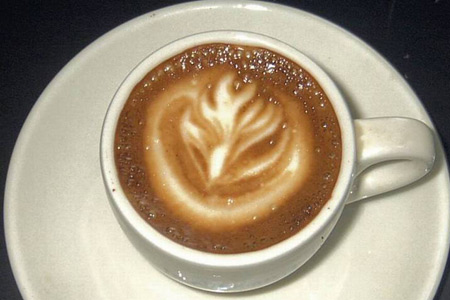
Before I was married, I drank coffee once. I was at a conference in a hotel that was so boring, I needed something to keep me awake, and there were no Cokes, my caffeine drug of choice at the time.
Then I got married to a coffee addict. A lot of people like coffee, I thought, maybe I could learn to like it.
Starbucks was coming along, but I didn't get it. Then I visited Vancouver. Vancouver and Seattle are are the hub and birthplace of "culinary" coffee in North America. We visited Caffe Artigiano, when I saw my first latte art. Something like this photo. It wasn't harsh, or bitter, or weak. It was as smooth as silk, rich like chocolate. Not steaming hot, but just the right temperature to drink it when they gave it to you. It was a small drink by modern coffee shop standards--only about 6 ounces.
I had to be able to do this. I got an espresso machine. A Saeco Classico (known now as the Saeco Aroma). Mostly it could make good espresso, but it took several tries each time I used to. The bad "shots" would be bitter or sour and generally undrinkable. The good shots were pretty good, but never matched what the best coffee shops could do. It was so hard to use, and the bad shots used up so much coffee, that we could only use it on weekends.
In my perfectionist drive to make espresso like I had in Vancouver, I took a barista class from Counter Culture Coffee. For six hours a group of six people brewed espresso, steamed milk and drank and critiqued our concoctions. I knew how to do this.
When I got back to my Saeco machine, I was making better drinks. It still took a long time and I still had a lot of waste.
Then the Saeco died.
I needed a new one. After tons of research, I bought a Rancilio Silvia. Now we have espresso every morning. Not perfect. But very good.

Wednesday, August 19, 2009
Farmer's Market Finds
One of the things I love most about going to the farmer's market is the discovery of a great food that I didn't know about. I'm not talking about anything new or weird like a strange African fruit. Just varieties of things that you see in the supermarket. However, most of the produce in a supermarket has been bred for tough skins for shipping and long life. In the supermarket world, if you don't sell it, you smell it.
Everyone should know about tomatoes at the farmer's market. They are just like you remember as a kid, very red, firm texture, mixture of sweet and acid. Those are easy.
Here are some new ones:
Eggplant. The specific variety here is called Listada de Gandia. This eggplant is actually egg-shaped, about 4 inches long. The skin is very thin and it has very few seeds. It is great on the grill, where it doesn't fall apart like regular black eggplants. This is actually quite meaty when cooked, and not bitter at all. Slice it into 1/4 inch slices, put a little salt on it and let it sit for a few minutes. Turn it over, put a little salt on the other side and let it sit again for a few minutes. Then dry it off, put a little pepper on it then a little olive oil and drop it on the grill on a medium direct heat. Don't let it burn, but its done when nicely browned.
Okra. In know, green slimmy stuff. Not Alabama Red Okra. It is truly red, and about the size of a large jalapeno, not long and skinny. The skin is very tender and it has more flesh than slime. Cut the stem off and slice the rest into 1/4 in. slices. Put in a bowl and mix in some salt, pepper and olive oil to coat. Put on a sheet pan and place in a hot oven, about 425 degrees. Let them roast for about 5 minutes then check them. If they have started to brown where they are resting on the pan, turn them as best you can to the other side with a spatula and put back in the over to roast again. They are done when they are golden brown and delicious on both sides. Pull them out, put in a bowl and eat like popcorn.

Everyone should know about tomatoes at the farmer's market. They are just like you remember as a kid, very red, firm texture, mixture of sweet and acid. Those are easy.
Here are some new ones:
Eggplant. The specific variety here is called Listada de Gandia. This eggplant is actually egg-shaped, about 4 inches long. The skin is very thin and it has very few seeds. It is great on the grill, where it doesn't fall apart like regular black eggplants. This is actually quite meaty when cooked, and not bitter at all. Slice it into 1/4 inch slices, put a little salt on it and let it sit for a few minutes. Turn it over, put a little salt on the other side and let it sit again for a few minutes. Then dry it off, put a little pepper on it then a little olive oil and drop it on the grill on a medium direct heat. Don't let it burn, but its done when nicely browned.
Okra. In know, green slimmy stuff. Not Alabama Red Okra. It is truly red, and about the size of a large jalapeno, not long and skinny. The skin is very tender and it has more flesh than slime. Cut the stem off and slice the rest into 1/4 in. slices. Put in a bowl and mix in some salt, pepper and olive oil to coat. Put on a sheet pan and place in a hot oven, about 425 degrees. Let them roast for about 5 minutes then check them. If they have started to brown where they are resting on the pan, turn them as best you can to the other side with a spatula and put back in the over to roast again. They are done when they are golden brown and delicious on both sides. Pull them out, put in a bowl and eat like popcorn.

Subscribe to:
Posts (Atom)